
In the era of open-concept living, the line between living rooms and kitchens has blurred. But this doesn’t mean your floors have to be a uniform, continuous surface. In fact, many homeowners are embracing a design trend that uses different flooring colors to define and enhance these connected spaces. Transitioning from one floor to another is a powerful design choice that can add visual interest, functionality, and a sense of intentionality to your home.
Whether you’re moving from a cozy hardwood living room to a durable tile kitchen or blending different shades of wood, a well-executed floor transition can transform your open floor plan into a masterpiece of design.
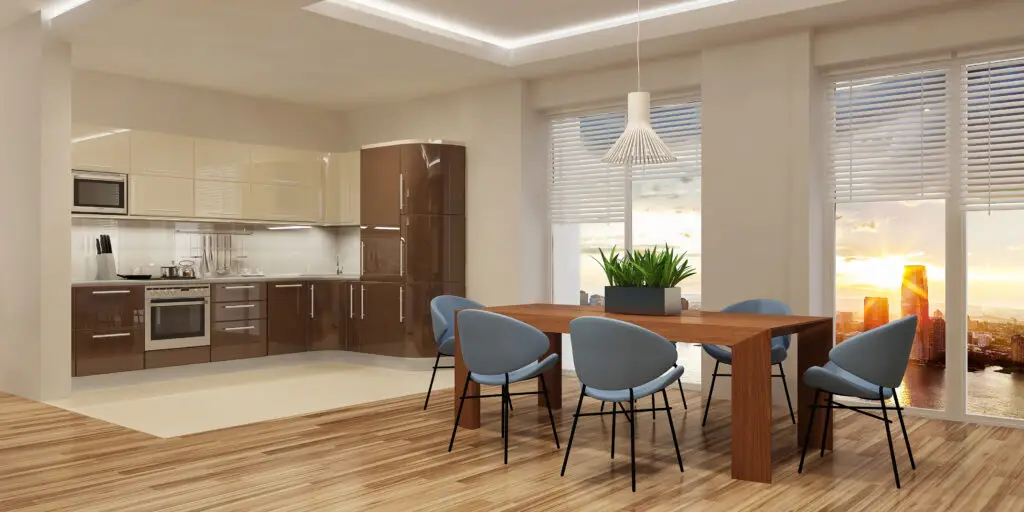
Why Homeowners Choose Different Floor Colors
Using different flooring colors isn’t just about aesthetics; it’s a strategic way to improve the flow and function of your space.
Defining separate spaces
In an open floor plan, it can be challenging to create distinct zones without a wall. By switching from a warm hardwood in the living room to a cool tile in the kitchen, you visually signal that you’ve entered a new area with a different purpose. This helps a large, open space feel more organized and purposeful. It’s like drawing an invisible line that separates the “relax and unwind” area from the “cook and gather” zone.
Highlighting open floor plans
When done correctly, a change in flooring can highlight the expansive nature of an open floor plan. Instead of a single, monolithic floor, the contrast of colors and textures draws the eye across the space, emphasizing its length and scale. This design choice turns a simple transition into a deliberate and beautiful feature of your home’s layout.
Best Practices for Color Transitions
For a transition to look intentional and well-designed, you need to think about how the colors and materials will interact.
Complementary tones
The most successful transitions use colors that complement each other. For example, if your living room has a warm, honey-toned hardwood, you might choose a tile with a warm undertone in the kitchen, such as a terracotta or beige. The materials are different, but their underlying warmth ties them together. Conversely, a cool-toned gray hardwood in the living room would pair beautifully with a cool, slate-colored tile.
Using borders or inlays
To make the transition a deliberate design feature, consider using a border or an inlay. This could be a strip of tile or a different wood species that acts as a decorative “bridge” between the two spaces. A mosaic tile border between a living room hardwood and a kitchen tile can add a high-end, custom look and make the transition feel less abrupt.
Transition Options
Beyond the design, you need to consider the practical methods of physically connecting the two different floors.
T-molding and reducer strips
These are the most common and practical transition pieces. A T-molding is a T-shaped piece used to connect two floors of the same height, providing a clean seam and a professional finish. A reducer strip is used when the two floors are at different heights, such as transitioning from a thicker hardwood floor to a thinner vinyl or tile. These pieces are simple to install and are often color-matched to your flooring.
Seamless blended designs
For a truly custom look, some homeowners opt for a seamless, blended design. This might involve a diagonal cut where the two floors meet, creating a zigzag pattern, or a complex inlay that smoothly transitions from one material to the other. These designs require expert craftsmanship and are perfect for making a high-end design statement.
Design Inspiration
Looking for some concrete ideas? These popular pairings can inspire your next project.
Light hardwood to dark tile
This is a classic high-contrast transition that works beautifully. The light hardwood of the living room feels open and airy, while the dark tile in the kitchen adds a sense of durability and elegance. This pairing is especially functional in a kitchen, where a dark tile can help hide stains and spills, making it a low-maintenance choice.
Warm wood to cool stone
Pairing a warm wood, like a rich oak or mahogany, with a cool-toned stone-look tile (like a gray or charcoal porcelain) creates a stunning, balanced aesthetic. The warmth of the wood makes the living room feel inviting and cozy, while the cool, sleek look of the tile provides a modern and clean surface for the kitchen.
FAQs
Should floors match throughout the house?
It’s a matter of personal preference and design intent. Having the same flooring throughout the house creates a uniform, cohesive look and can make a small home feel larger. However, using different floors to define spaces, as we’ve discussed, can add visual interest, improve functionality, and create a custom, intentional design. There is no right or wrong answer—only what’s best for your home and lifestyle.
Do different floors lower resale value?
When executed poorly, a mix-and-match flooring selection can be a red flag for homebuyers. However, a high-quality, professionally installed floor transition that serves a clear design purpose will not lower your home’s value. In fact, a thoughtfully designed and unique floor plan can be a significant selling point that sets your home apart from others.
Ready to make your living room and kitchen floors work together in perfect harmony? Contact the experts at Sky Hardwood Floors today for a free on-site consultation to explore our collection of hardwood, tile, and luxury vinyl options that will bring your vision to life.